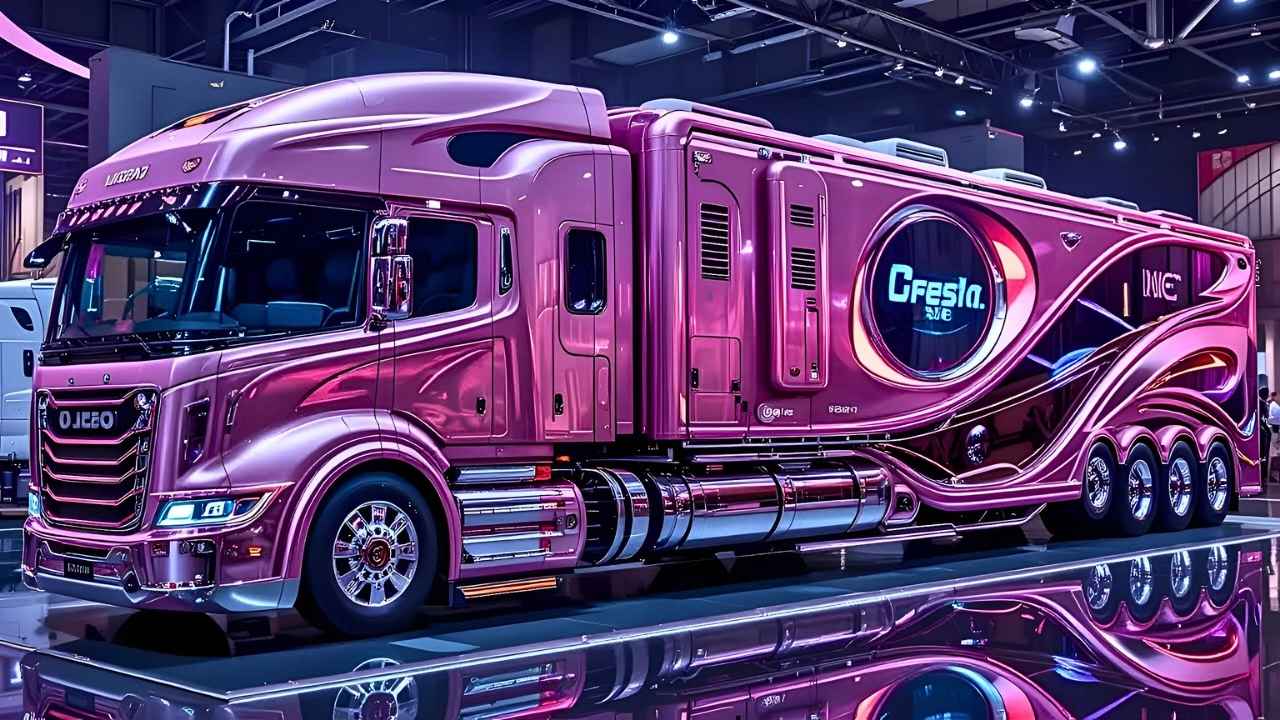
2026 Ultimate Machines: As we move further into the 21st century, technological advancements continue to reshape the world around us. The year 2026 promises to be a milestone in the development of machines that not only perform remarkable feats but also redefine what is possible in fields like automotive design, artificial intelligence, robotics, and sustainability. These “ultimate machines” are set to revolutionize industries and transform everyday life. In this post, we explore some of the most groundbreaking technologies and innovations that are set to dominate the landscape in 2026 and beyond.
The Rise of Autonomous Vehicles
One of the most significant breakthroughs expected in 2026 is the continued evolution of autonomous vehicles. Self-driving cars, trucks, and even drones are poised to revolutionize transportation, making roads safer, reducing traffic, and enhancing convenience. Advanced AI, machine learning, and real-time data processing will allow vehicles to navigate without human intervention, making driving more efficient and less stressful.
The 2026 generation of autonomous cars will come with next-gen sensors, lidar systems, and cameras, enabling vehicles to perceive their surroundings in incredible detail. Enhanced by 5G connectivity, these machines will be able to communicate with one another, predicting traffic conditions and optimizing routes in real-time. Companies like Tesla, Waymo, and Uber are already leading the charge, and by 2026, autonomous vehicles will likely be a common sight on the roads.
The rise of autonomous trucks also has the potential to revolutionize the logistics industry. With machines that can operate around the clock without the need for rest breaks, supply chains could become faster and more efficient, leading to lower costs and quicker delivery times for consumers.
Artificial Intelligence: Moving Beyond Automation
AI is already transforming industries, but by 2026, its capabilities will go far beyond simple automation tasks. Machine learning, deep learning, and natural language processing (NLP) technologies will reach new heights, enabling machines to think, adapt, and understand the world in ways that mirror human cognition.

One of the most exciting applications of AI in 2026 will be in healthcare. AI-powered diagnostic tools will be able to analyze medical data, such as X-rays, MRIs, and patient records, with an unprecedented level of accuracy. Machine learning algorithms will detect diseases like cancer at earlier stages, providing doctors with powerful tools to improve patient outcomes.
In addition, AI will drive innovation in fields like entertainment, finance, and customer service. AI-driven content creation, personalized experiences, and smarter algorithms will not only make tasks more efficient but also create new experiences that were previously unimaginable. By 2026, AI assistants could be as integral to daily life as smartphones are today, helping with everything from personal tasks to complex professional challenges.
Robotics: The Machines That Will Transform Work and Life
Robotics is another field poised for explosive growth by 2026. While robots have already made significant strides in manufacturing, the next generation of machines will be even more versatile, intelligent, and capable of performing a wider range of tasks.
In the workplace, robots will increasingly take on roles that were traditionally handled by humans. In manufacturing, collaborative robots (cobots) will work alongside humans to improve productivity and safety. These robots will be highly adaptable, able to perform repetitive tasks with precision while also learning to handle more complex challenges.
Robotics will also revolutionize industries such as construction, logistics, and even healthcare. In construction, autonomous machines will be able to build structures faster and with greater accuracy. Robots will also assist surgeons in performing delicate operations, providing enhanced precision and support during complex procedures.

Additionally, the rise of personal robots will change the way people live. Robots will help with household chores, caregiving, and even companionship, offering individuals the opportunity to live more comfortably and efficiently.
Sustainability and Green Technology
As the world continues to face environmental challenges, the machines of 2026 will increasingly focus on sustainability and energy efficiency. Green technology is no longer a trend; it’s a necessity. In 2026, we will see advanced energy solutions, cleaner manufacturing processes, and more eco-friendly transportation systems.
Electric vehicles (EVs) will become the norm, not the exception. In addition to passenger vehicles, electric trucks, buses, and even planes will become more common, reducing the carbon footprint of transportation. Charging infrastructure will be more widespread, making EVs a practical choice for the average consumer.
In the energy sector, fusion power may no longer be a distant dream. Scientists are making significant strides toward developing clean, virtually limitless energy through nuclear fusion. By 2026, fusion reactors could become viable, providing a new source of energy that could change the global energy landscape forever. This would reduce reliance on fossil fuels and help mitigate the effects of climate change.
Furthermore, advanced materials, such as carbon capture technologies and biodegradable alternatives to plastics, will be critical to reducing waste and pollution. These innovations will pave the way for a future where machines contribute to a sustainable and eco-friendly world.

Quantum Computing: Unlocking New Possibilities
Another groundbreaking machine technology to watch out for in 2026 is quantum computing. Quantum computers operate on principles of quantum mechanics, allowing them to process information in ways traditional computers cannot. These machines will solve problems that are currently too complex for even the most advanced supercomputers.
In fields like cryptography, material science, and artificial intelligence, quantum computers will have the potential to revolutionize industries by solving problems that were previously thought to be unsolvable. For example, quantum computing could lead to the development of new materials with properties that can be tailored for specific applications, enabling the creation of more efficient batteries, stronger construction materials, and advanced pharmaceuticals.
By 2026, we may see the first commercial quantum computers, allowing businesses and governments to tackle problems on a scale that’s never been possible before.
The Future of Connectivity: 5G and Beyond
Connectivity is a key enabler of many of the ultimate machines we’ll see in 2026. 5G networks will become ubiquitous, allowing for ultra-fast, low-latency communication between machines, vehicles, and devices. This high-speed connectivity will unlock the full potential of autonomous vehicles, smart cities, and the Internet of Things (IoT).
By 2026, we will see the emergence of 6G technology, which will offer even faster speeds, greater bandwidth, and more reliable connections. This will make technologies like virtual reality (VR), augmented reality (AR), and remote work more immersive and seamless. It will also enable new innovations in healthcare, entertainment, and even space exploration, allowing for real-time communication and data exchange on a global scale.

Conclusion
The year 2026 will be a defining moment for the machines that are shaping our future. From autonomous vehicles and AI-driven healthcare to advanced robotics and green technologies, we are entering a new era of innovation. These ultimate machines will not only make life more efficient and convenient but will also have the potential to tackle some of humanity’s most pressing challenges, from climate change to healthcare disparities. As these technologies continue to evolve, the possibilities for the future are limitless. The machines of 2026 will not just change industries they will transform the way we live, work, and interact with the world around us.