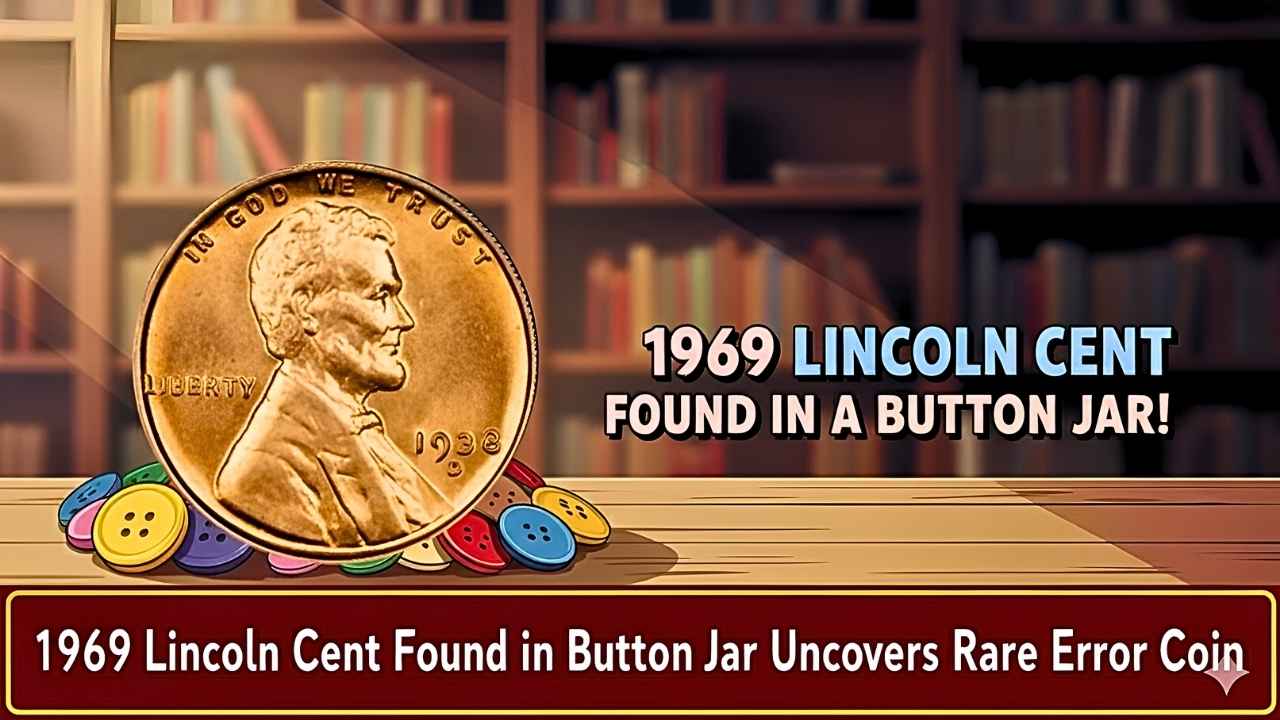
1969 Lincoln Cent Found: Coin collecting has always been a thrilling hobby, full of stories of discovery, rare finds, and unexpected treasures. One of the most exciting aspects of numismatics is the occasional chance encounter with a rare error coin, often found tucked away in unexpected places. In this case, a 1969 Lincoln cent, casually discovered in a jar of old buttons, has unveiled a remarkable piece of history—a rare and valuable error coin that’s been hidden in plain sight for decades.
The Discovery: An Unexpected Treasure
The story begins like many others in the world of coin collecting: a casual glance at an old jar of buttons. A collector or casual enthusiast might have assumed the jar held nothing more than worn-down buttons from clothes long past their prime. But upon closer inspection, one of the buttons—actually a 1969 Lincoln cent—caught the eye of its owner.
At first glance, it might have appeared like any other worn penny, part of the millions of cents minted that year. However, upon closer inspection, something wasn’t quite right. The coin was noticeably different from typical 1969 Lincoln pennies—there appeared to be a clear doubling effect on the date and the mintmark. What looked like a case of overzealous die-striking was, in fact, an error coin that would soon garner the attention of numismatists and collectors around the world.
The Error: 1969-S Doubled Die Obverse
What this casual discovery revealed was not just any ordinary 1969 penny, but a rare 1969-S Doubled Die Obverse (DDO). Error coins, especially those involving doubled dies, occur when a coin die strikes the metal planchet (blank coin) more than once, causing the image to appear doubled. The most famous examples of this kind of error are the 1955 Doubled Die Obverse and the 1969-S, both of which have become highly sought after by collectors due to their rarity and distinct features.

The 1969-S DDO features noticeable doubling on the date (1969) and the mintmark (S). In many cases, this doubling can be seen clearly on the lower portion of the “9” in the date, as well as along the left side of the “S” mintmark. The most significant identifying feature of the coin is the bold, visible doubling on the obverse, which includes the date and other inscriptions. This doubling is distinct and easy to spot, even by collectors who are just beginning to explore error coins.
Why the 1969-S DDO Is So Rare
The 1969-S DDO is considered one of the most notable error coins from the 1960s, yet it is also one of the most elusive. The rarity of this coin is a direct result of how the error occurred during production. While the coin was minted in San Francisco, only a small number of 1969-S cents actually contained the doubled die. The majority of 1969 pennies, even those minted at the San Francisco Mint, were struck without the error, making the 1969-S DDO a sought-after find.
Only a handful of these error coins were ever identified and brought to market, and because they were struck in 1969, many remained unnoticed in everyday circulation for decades. Most of these rare coins were likely pulled from circulation over time due to their age and wear, leaving behind only a few pristine examples. As a result, the 1969-S Doubled Die Obverse has become a prized coin among collectors of error coins.
How to Identify a 1969-S DDO
For those with an eye for detail, identifying a 1969-S DDO is relatively straightforward. The most prominent feature to look for is the doubling of the date, particularly the numbers “9” in the year 1969. This doubling is visible on both the upper and lower sections of the digits, and sometimes even along the left side of the numbers.
In addition to the date, the “S” mintmark is another critical area to examine. On a genuine 1969-S DDO, the mintmark will display a clear doubling, especially noticeable on the lower part of the letter. A close-up examination of these areas should reveal the doubled impressions.
It’s important to note that not all doubling on a coin is considered a valuable error. Some coins can show wear and tear or die deterioration, which may create a blurred, doubled appearance that is not the result of a true doubling die error. The doubling on the 1969-S DDO is crisp and distinct, setting it apart from other less valuable examples.
The Value of a 1969-S Doubled Die Obverse
The value of the 1969-S Doubled Die Obverse depends largely on the condition of the coin. In general, a well-preserved 1969-S DDO can command a significant premium over a standard 1969 Lincoln cent. Coins that are graded in mint state or near-mint condition are especially valuable.
The value of a 1969-S DDO can range from a few hundred dollars in lower grades to tens of thousands of dollars in higher grades, with coins that are graded MS65 or better (mint state) reaching the highest prices at auction. In fact, a specimen of this error coin in top condition could potentially fetch over $40,000 or more, depending on its grade and market demand.
In general, error coins like the 1969-S DDO are prized for their rarity and the intrigue surrounding their origins. For collectors, owning a rare error coin is both an investment and a piece of numismatic history, and discovering one in an unexpected place, like a button jar, adds an extra layer of excitement and value to the find.
Collecting Error Coins: Why It Matters
The discovery of rare error coins like the 1969-S Doubled Die Obverse is one of the reasons why coin collecting is such a rewarding hobby. For collectors, it’s not just about the coins themselves but about the journey of discovery. Error coins, by their very nature, are rare and often represent mistakes in the production process. These mistakes become part of a coin’s charm and appeal, turning an otherwise mundane piece of currency into a sought-after collectible.
For those who are new to coin collecting or who are interested in adding error coins to their collection, learning to spot these types of mistakes and understanding their significance is a key part of the hobby. The discovery of an error coin like the 1969-S DDO is a reminder of how important it is to carefully examine coins and pay attention to the smallest details, as the next great find could be hidden in the most unexpected of places.
Conclusion
The discovery of a 1969-S Lincoln cent in a jar of buttons, later identified as a rare Doubled Die Obverse, is a thrilling example of how coin collectors can stumble upon incredible treasures. The 1969-S DDO is one of the most coveted error coins of the 20th century, and finding one in such an unexpected manner adds to the excitement of the numismatic world. As collectors continue to search for these rare coins, the value and intrigue surrounding them are only expected to grow, making them a worthy addition to any collection.