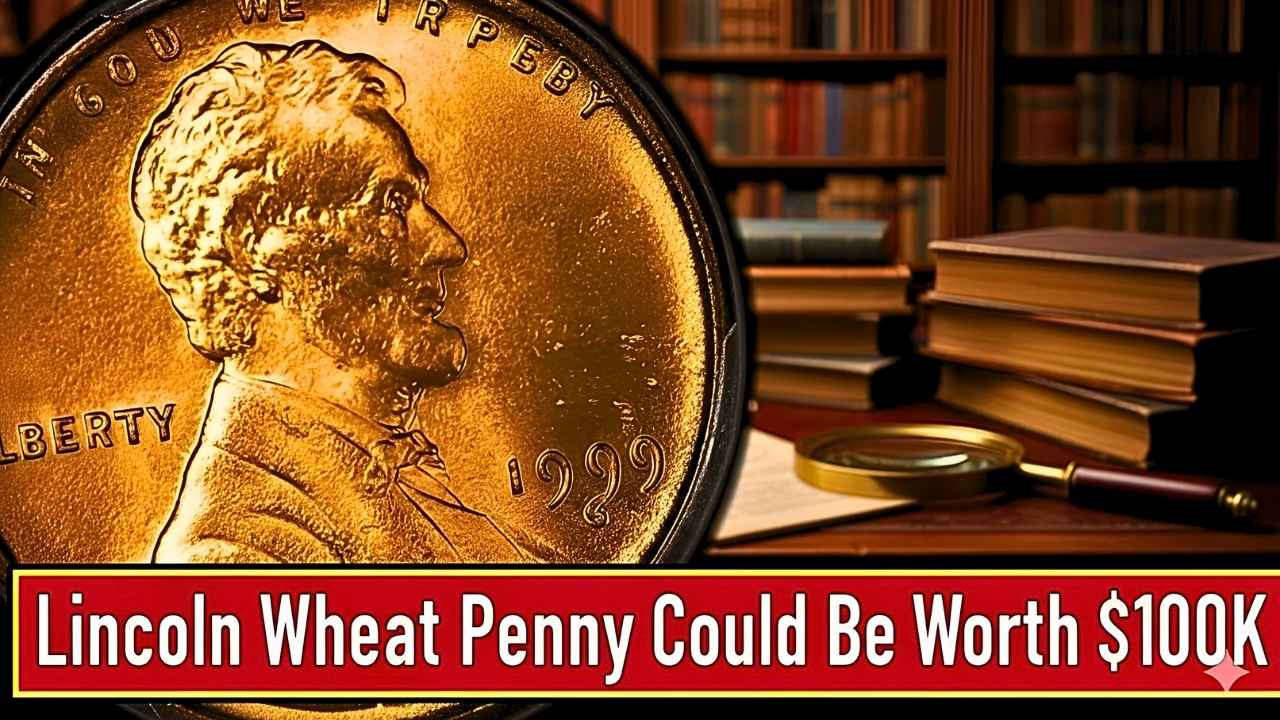
Lincoln Wheat Penny Could Be Worth $100K: The world of coin collecting is full of surprising discoveries, where everyday items hide untold value. One of the most iconic coins in American history, the Lincoln Wheat penny, is often dismissed as just another piece of change. However, what many don’t realize is that some Lincoln Wheat pennies could be worth a fortune up to $100,000 or more and some of these coins are still circulating today, just waiting to be discovered.
So, what makes a seemingly ordinary penny so valuable, and how can you tell if you might have one of these rare finds in your pocket? Let’s explore the history of the Lincoln Wheat penny, the rare varieties that can fetch big money, and how to identify if you’ve struck gold.
The Lincoln Wheat Penny: A Coin with History
The Lincoln Wheat penny was first minted in 1909 to celebrate the 100th anniversary of Abraham Lincoln’s birth. Designed by Victor David Brenner, the coin features a portrait of Lincoln on the obverse (front) and two stalks of wheat on the reverse (back), which is how it earned the “Wheat penny” nickname. The Wheat penny was produced until 1958, when it was replaced by the Lincoln Memorial cent.
Over the decades, the Lincoln Wheat penny has become a beloved part of American numismatic history, representing both the country’s rich legacy and its evolving coinage. While most of these pennies are worth only their face value (one cent), certain years, mintmarks, and error varieties can make them highly valuable to collectors. It’s these rare coins that can command prices in the thousands or even hundreds of thousands of dollars.

The Coin That Could Be Worth $100K
The most famous Lincoln Wheat penny that could be worth $100,000 is the 1943 Copper Wheat penny. This coin is an extraordinary rarity that was produced by mistake during World War II, when the U.S. Mint needed to conserve copper for the war effort. Most 1943 pennies were struck in steel and coated with zinc, but a few copper planchets (blanks) were mistakenly used to produce a small batch of 1943 pennies. These coins, struck on copper instead of steel, have become one of the most valuable and sought-after error coins in the world.
A single 1943 copper penny has been known to fetch prices in the six-figure range at auctions, with one example selling for over $1 million in 2019. However, finding one of these error coins is exceptionally rare, and the vast majority of 1943 pennies are made of steel and worth only their face value.
What Makes the 1943 Copper Penny So Special?
The 1943 copper penny is unique not only because of its rarity, but also because of the circumstances surrounding its creation. In 1943, the U.S. Mint was under pressure to produce large quantities of coins due to the needs of the war. As part of the effort, the Mint switched to using steel for pennies to free up copper for use in ammunition and other wartime supplies.
But in the rush to produce enough pennies, a small number of copper planchets from previous years (primarily 1942) were mistakenly used. This created the 1943 copper Wheat penny, which was supposed to be made entirely from steel. Because of this production error, only a handful of these coins exist today, making them a “holy grail” for collectors.
There’s no exact count of how many 1943 copper pennies remain, but it’s estimated that fewer than 20 survive in good condition. Most of these coins are stored in private collections or have been sold at public auctions, with some examples fetching record prices.
Other Valuable Lincoln Wheat Pennies
While the 1943 copper penny is by far the most valuable of all the Wheat pennies, there are other rare varieties that can also command impressive prices. Here are a few examples:
1909-S VDB Wheat Penny
The 1909-S VDB is one of the most famous and sought-after Wheat pennies, valued for both its historical significance and its rarity. The “VDB” stands for Victor David Brenner, the designer of the coin, whose initials were removed from the reverse side shortly after the coin’s release. Only around 484,000 of these pennies were minted, and many were lost or melted down over the years. A high-grade 1909-S VDB can sell for tens of thousands of dollars, with the best examples fetching around $100,000 or more at auction.
1914-D Wheat Penny
The 1914-D is another rare and valuable Wheat penny. Only about 1.1 million of these coins were minted at the Denver Mint, making them scarce in high grades. The 1914-D penny is highly coveted by collectors, especially those who focus on key dates in the Wheat penny series. Depending on its condition, the value of a 1914-D can range from a few hundred dollars to upwards of $10,000 or more.
1922 No D Wheat Penny
The 1922 No D is another error coin that can be worth a lot of money. During the production of the 1922 Wheat penny, some coins were struck without the “D” mintmark, which was meant to indicate that the penny was minted in Denver. This error is considered highly desirable by collectors, and an example in high grade can sell for $30,000 or more. However, the 1922 No D is often confused with a heavily worn 1922 penny that looks like it lacks the mintmark, so it’s important to have the coin authenticated by a professional.
How to Spot a Rare Wheat Penny in Circulation
If you’re checking your spare change for a rare Lincoln Wheat penny, it’s important to know what to look for. While most Wheat pennies are worth only a few cents, there are key signs that could indicate you have a valuable coin in your collection:
- Look for the Date and Mintmark: The first thing to check is the date on the obverse of the coin. Rare dates like 1909-S, 1914-D, 1922 No D, and 1943 copper are among the most valuable. Make sure to also check the mintmark under the date, as coins minted in specific cities (like Denver, marked with a “D”) can be worth more.
- Check the Condition: The condition of the coin is critical when determining its value. Coins in higher grades (such as MS-64 or MS-65) can be worth significantly more than those in lower grades (such as G-4 or VG-8). A well-preserved coin with minimal wear is always worth more than a heavily worn one.
- Examine for Errors: If you’re specifically looking for valuable error coins, like the 1943 copper penny or the 1922 No D penny, closely inspect the coin for obvious mistakes in the minting process. The doubling, missing mintmark, or incorrect material used to strike the coin are key identifiers.
- Use Magnification: Many of the rare features on valuable pennies, such as doubled digits or mintmark errors, can be very subtle. A magnifying glass or jeweler’s loupe can help you identify the tiniest of details.
What to Do If You Find a Rare Wheat Penny
If you believe you’ve found a rare Lincoln Wheat penny, the next step is to get it professionally graded and authenticated by a reputable numismatic organization, such as the Professional Coin Grading Service (PCGS) or the Numismatic Guaranty Corporation (NGC). Having the coin graded will not only confirm its authenticity but also assign it a grade that can significantly affect its value.
Once your coin has been graded, you can decide whether to keep it in your collection, sell it, or even auction it off to the highest bidder. Some of these rare coins have sold for hundreds of thousands, even millions, of dollars, so it could be a life-changing discovery.
Conclusion
While the Lincoln Wheat penny is a coin that’s often overlooked, certain varieties of this iconic piece of American history can be worth a small fortune. Whether it’s the rare 1943 copper penny, the 1909-S VDB, or another highly sought-after error or key-date coin, you may be holding a $100,000 (or even more) treasure in your pocket. As you go through your spare change, keep an eye out for these rare and valuable pennies—you never know when you might stumble upon a coin that could change your financial future.