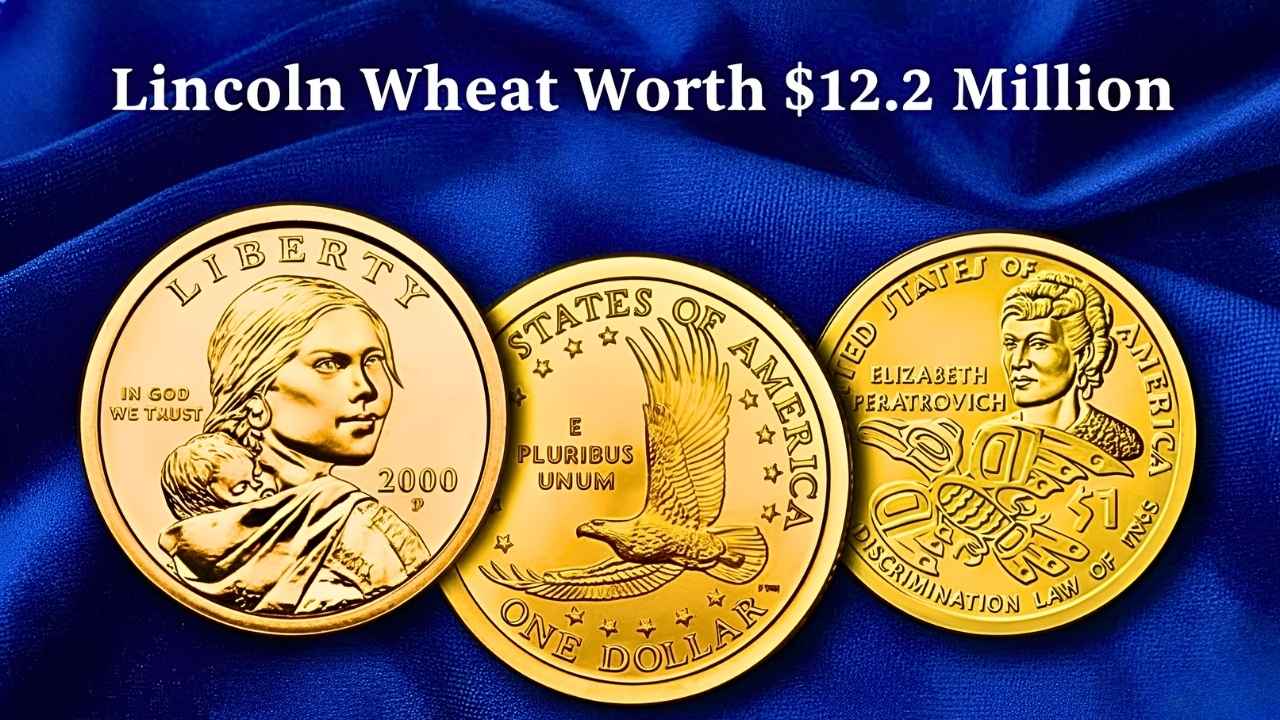
Lincoln Wheat Penny Worth $12.2 Million: In the world of coin collecting, stories of rare finds and unexpected windfalls are not as common as you might think. But every once in a while, a discovery comes along that completely defies expectations, capturing the attention of numismatists and casual observers alike. One such discovery is the story of a Lincoln Wheat Penny that recently sold for a staggering $12.2 million a coin that has been hiding in plain sight, still circulating in everyday change.
The Unexpected Treasure
Imagine this: you’re rummaging through your change jar, looking for some spare change to grab a cup of coffee, and you spot a coin that looks a little different. It’s a Lincoln Wheat Penny, one of the most well-known coins in American history, minted between 1909 and 1958. Most of these pennies are worth just one cent, but a small fraction of them hold the potential for much more.
That’s exactly what happened with one lucky collector, who stumbled upon a 1943 Lincoln Wheat Penny that was no ordinary coin. In fact, it was worth a whopping $12.2 million.
But what makes this particular penny so special? It’s not the year, the design, or even its age. Instead, this penny is remarkable because it was struck on a copper planchet instead of the usual steel. A rare mistake during the minting process, this “error coin” has become one of the most valuable and sought-after pieces in the numismatic world.

The History Behind the 1943 Lincoln Wheat Penny
To understand why this coin is worth millions, we need to dive into the history behind the 1943 Lincoln Wheat Penny. During World War II, copper was in high demand for military production, so the U.S. Mint was tasked with finding an alternative metal for pennies. As a result, in 1943, the Mint produced pennies using a zinc-coated steel planchet instead of the usual copper.
However, a handful of copper planchets from previous years had been accidentally left in the Mint’s vaults. These copper planchets were used in error to strike some of the 1943 pennies, creating what are known as “copper 1943 pennies.” While only a small number of these coins were produced, they have become legendary among coin collectors due to their rarity.
Over the years, these error coins have been discovered in various places, including in rolls of pennies that people have kept in their homes for decades. The most recent sale of a copper 1943 Lincoln Wheat Penny fetched an astounding $12.2 million at auction, solidifying its place in numismatic history.
Why Is This Penny Worth So Much?
The primary reason for the high value of the 1943 copper penny lies in its rarity. Only a few dozen of these coins are believed to exist today. Over the years, many of them have been discovered and sold to private collectors, and the value of the remaining examples has skyrocketed.
For collectors, the allure of owning one of these rare error coins is irresistible. Coins like this are considered “one-of-a-kind,” and their scarcity makes them highly coveted. In addition to rarity, the historical context also plays a significant role in determining value. The 1943 copper penny is tied to a pivotal moment in U.S. history: World War II. It symbolizes not only a minting error but also a moment when the U.S. had to adapt to the needs of wartime production.
Still Circulating in Everyday Change
What’s perhaps most astonishing about the 1943 copper penny is that some of these error coins are still circulating in everyday change. Though the chances of finding one are extremely slim, they remain in circulation due to their similarity to regular 1943 steel pennies. Many people simply don’t know how to identify the rare copper version.
For those who are savvy enough to spot the difference, however, the 1943 copper penny represents an incredible opportunity. The distinguishing feature is simple: the 1943 copper penny has a warm, reddish-brown color, typical of copper, while the steel version is silver and magnetic. Those who are vigilant in their coin collecting might just find themselves with a small fortune.
What Happens When You Find One?
If you happen to find a 1943 copper penny, the first thing you should do is hold on to it and don’t spend it! These error coins are extremely valuable, and their worth can increase over time. If you believe you have found one of these rare pennies, it’s best to have it authenticated by a professional coin grading service to verify its authenticity. A certified coin is worth significantly more than an uncertified one, so getting it graded is an essential step for any potential seller.

For those lucky enough to discover such a coin, selling it can lead to a life-changing sum of money. The 1943 copper penny that sold for $12.2 million was sold through a prestigious auction house to a private collector who was willing to pay a premium for a piece of American history.
How to Spot a Rare Coin in Your Change
Finding a rare coin like the 1943 copper penny isn’t as simple as checking every penny you come across, but there are a few tips for spotting potential treasures in your everyday change:
- Know Your Coins: Familiarize yourself with the key details of error coins, such as the 1943 copper penny. Understanding the minting history and identifying marks will help you spot rarities more easily.
- Check for Mintage Errors: Look for signs of double strikes, off-center strikes, or unusual markings. These errors can make a coin much more valuable.
- Look for Unique Metals: Coins made from unusual metals or alloys (like the 1943 copper penny) are prime candidates for being error coins. If you find a penny that looks different from the others, take a closer look.
- Get Your Coins Authenticated: If you think you have a rare coin, always have it professionally graded and authenticated to ensure its value.
Final Thoughts
The discovery of a Lincoln Wheat Penny worth $12.2 million is a rare and extraordinary event, but it’s a reminder that even the most ordinary-seeming coins can hold incredible value. While the chances of stumbling upon a rare 1943 copper penny in your change are slim, the world of coin collecting is filled with stories of hidden treasures waiting to be discovered. So next time you dig through your pocket change, remember that a rare find could be closer than you think and maybe you’ll be the next to make history.