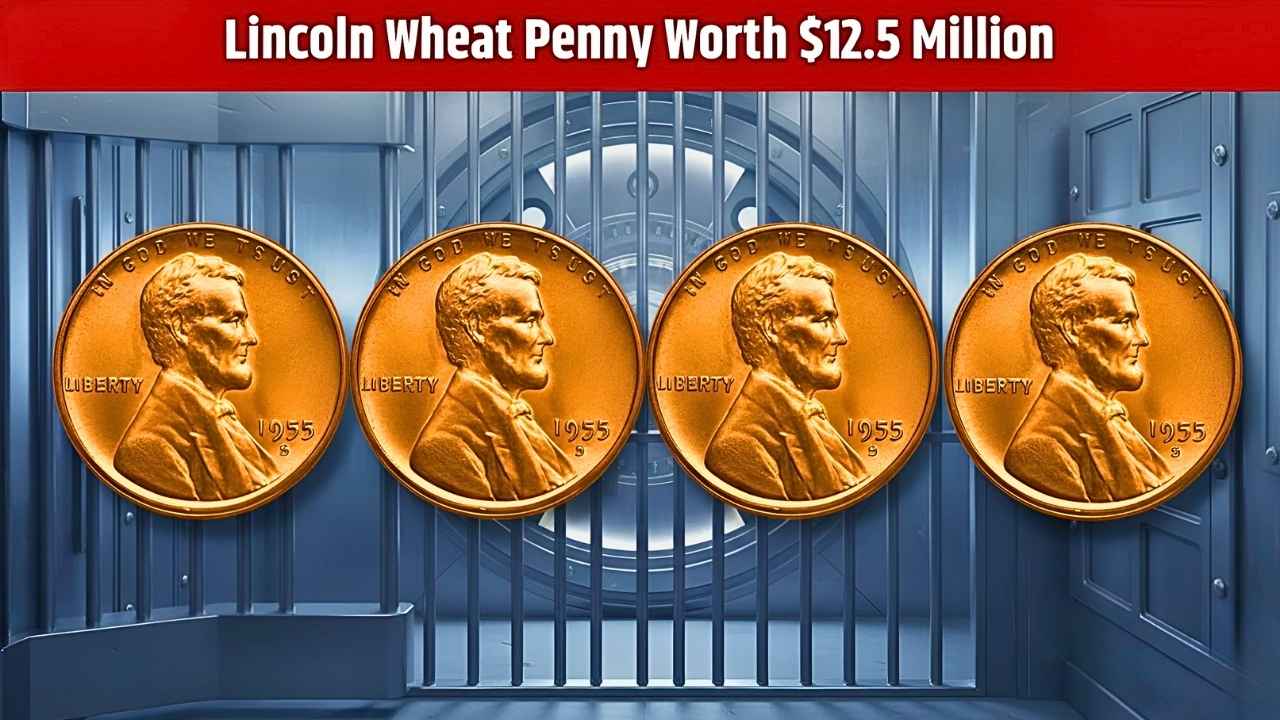
Lincoln Wheat Penny Worth $12.5 Million: In the world of coin collecting, some treasures are so rare and valuable that they become legendary. One such coin is the Lincoln Wheat Penny, a humble one-cent piece that has a story so extraordinary, it sounds like the stuff of coin-collecting folklore. But for those who know their numismatics, the reality is even more thrilling. The 1943 copper Lincoln Wheat Penny, a coin minted in error during World War II, was recently valued at a mind-boggling $12.5 million and it’s still circulating in everyday change today.
This coin, like many rare collectibles, was the result of an unlikely mistake. And while most of these coins have been locked away in private collections or auctioned off to the highest bidder, a few still circulate undetected in everyday transactions. Here’s the story behind the 1943 copper Lincoln Wheat Penny that could be hiding in your pocket right now.
The 1943 Copper Penny: A Rare Minting Error
In 1943, during World War II, the U.S. Mint faced a copper shortage due to the demands of wartime production. As a result, the Mint decided to switch the metal used in penny production from copper to zinc-coated steel. The intention was to conserve copper for more critical war efforts. However, during the process, a small number of pennies were struck on leftover copper planchets from previous years. These copper pennies, dating from 1943, became the unintentional “error coins” that would soon captivate the world of numismatics.
While most 1943 pennies were made of steel, a handful were struck on copper planchets, which are visually distinct from their steel counterparts. Copper pennies have the signature reddish-brown color, while the steel ones are silver and magnetic. Today, this rare mistake has become one of the most sought-after coins in the world, with a value far exceeding its nominal one-cent face value.
Why Is the 1943 Copper Lincoln Wheat Penny Worth So Much?
So, what makes the 1943 copper penny so special? It’s the rarity and historical context that elevate its value. Only a small number of these copper pennies were minted, and the exact number in circulation today is uncertain. Experts estimate that there are fewer than 20 copper 1943 pennies left, making them incredibly rare and valuable.
Here are the key reasons for their astronomical value:
1. Rarity
The key factor driving the value of the 1943 copper penny is its rarity. The total number of copper pennies struck in 1943 was extremely low, and over the years, most have either been lost, damaged, or hoarded in private collections. Only a handful remain in circulation today, and these few pieces have become some of the most prized treasures in the coin-collecting world.
2. Historical Significance
The 1943 copper penny carries with it a deep historical significance. It was produced at a time when the United States was deeply involved in World War II, and the Mint’s decision to switch to steel was directly influenced by the demands of the war effort. This coin is not only a rare mistake but also a symbol of the wartime period, when resources were carefully rationed for military production. Owning a 1943 copper penny is like holding a piece of history in your hand.
3. Collector Demand
The world of coin collecting is driven by demand, and the rarer the coin, the higher the demand. Collectors are constantly on the lookout for these rare treasures, and as more time passes, the number of available copper 1943 pennies dwindles, further increasing their value. When a 1943 copper penny goes up for auction, collectors compete fiercely to secure it, which drives the price to astronomical heights. The last known sale of a copper 1943 penny fetched $12.5 million, setting a new record for a Lincoln Wheat Penny.
The $12.5 Million Penny
The 1943 copper Lincoln Wheat Penny that was recently valued at $12.5 million was one of the finest examples in existence. It was in exceptional condition, graded as “MS 64 Red” by the Professional Coin Grading Service (PCGS), which means it had only minor imperfections. This high-grade coin made it particularly valuable and helped secure its record-breaking price at auction.
What makes this sale so noteworthy is not only the massive sum of money the penny fetched but also the rarity of such a coin in this condition. Coins like this one are not only valuable for their error but also for their well-preserved state. A coin in perfect condition with historical value becomes more than just a piece of currency it becomes a true numismatic treasure.
Still Circulating: How to Spot the Rare Copper Penny
What’s truly astonishing about the 1943 copper penny is that some of these coins are still in circulation today, possibly hiding in your change jar or even in your pockets. While the vast majority of these rare coins have been collected, some remain in circulation because they are so similar to their steel counterparts. The only way to tell them apart is by examining their color.

Identifying the 1943 Copper Penny
- Color: Copper pennies have a reddish-brown hue, while the steel pennies are silver and magnetic.
- Magnetic Test: The steel pennies from 1943 are magnetic due to their zinc coating, while copper pennies are not.
- Weight and Sound: Copper pennies are slightly heavier than the steel variety, and they produce a different sound when dropped or tapped.
If you come across a 1943 penny that looks different from the rest, it’s worth taking a closer look. If it’s copper-colored and doesn’t exhibit the magnetic properties of the steel pennies, you could have one of the rare copper 1943 pennies and potentially be holding a small fortune.
What to Do If You Find One
If you suspect you’ve found a copper 1943 Lincoln Wheat Penny, don’t spend it! The next step is to get the coin authenticated by a professional grading service, such as the PCGS or the Numismatic Guaranty Corporation (NGC). Authentication is critical to confirming whether the coin is a genuine 1943 copper penny or just an ordinary 1943 steel penny that has been discolored over time.
Once the coin is authenticated, it will be graded for its condition. A high-quality coin, like the one that sold for $12.5 million, will command a much higher price than one that’s in poor condition. If the penny is authenticated and graded highly, you may want to consider selling it at a reputable auction house or keeping it as a long-term investment.
Final Thoughts: The Hunt for Rare Coins
The Lincoln Wheat Penny valued at $12.5 million is a testament to the allure and excitement of coin collecting. It’s a reminder that hidden treasures are still out there in the most unexpected places including in your spare change. While the chances of finding a rare 1943 copper penny are slim, there are other valuable coins out there waiting to be discovered. Whether you’re an avid collector or just someone curious about coins, knowing what to look for can make all the difference.

So, next time you’re sifting through your change, remember that a coin with a seemingly ordinary history could have a value far beyond what you might expect. The 1943 copper penny may be rare, but the world of numismatics is filled with surprises, and who knows? You might just stumble upon the next big discovery.