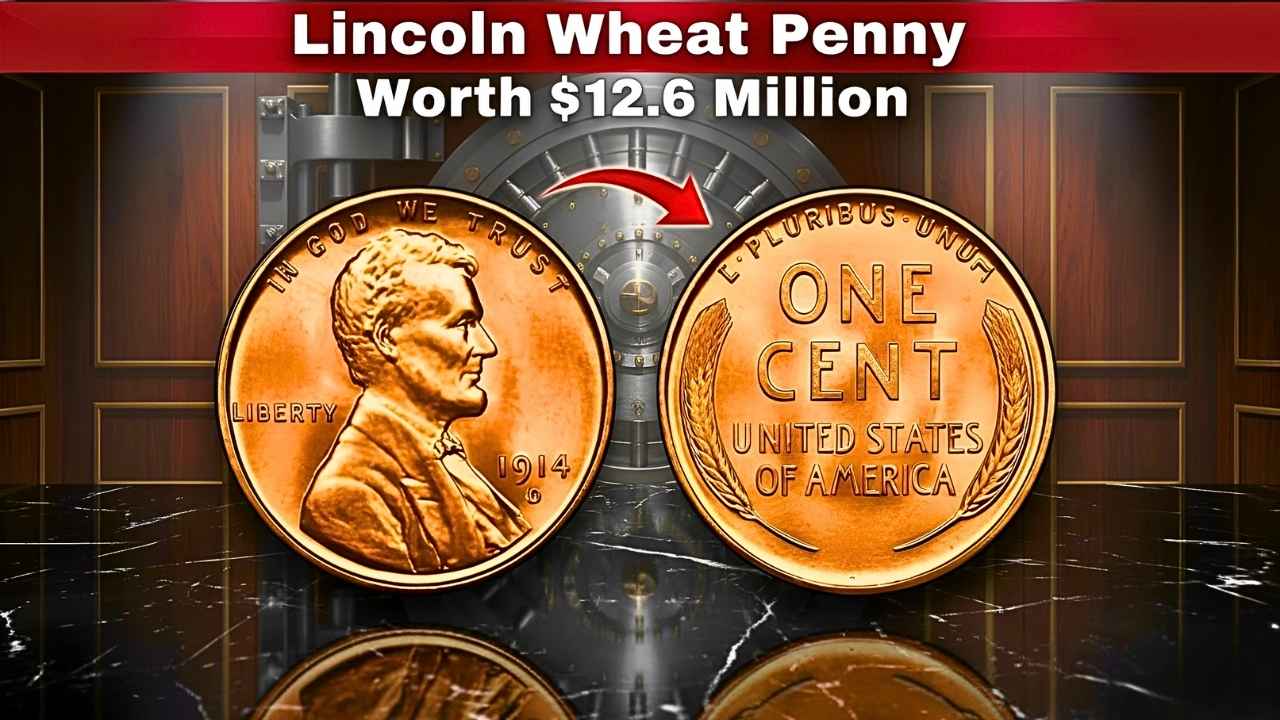
Lincoln Wheat Penny Worth $12.6 Million: In the world of coin collecting, certain pieces are legendary and among the most coveted is the 1943 copper Lincoln Wheat Penny. Despite being one of the most common and ubiquitous coins in American history, some Lincoln Wheat Pennies hold astonishing value due to rare minting errors. One of these pennies was recently sold for an eye-watering $12.6 million, a record price for any Lincoln Wheat Penny.
What’s even more fascinating? This rare coin is still circulating in the wild today, possibly hiding in your pocket or jar of spare change. The story behind this penny is as much about historical happenstance as it is about the potential to uncover a hidden treasure in the most unsuspecting places. Here’s the story of the 1943 copper Lincoln Wheat Penny and why it could be worth millions.
The 1943 Copper Lincoln Wheat Penny: A Minting Mistake
The story of the 1943 copper penny starts during World War II, a time when resources were tightly controlled for the war effort. The U.S. Mint was facing a shortage of copper, which was needed for military applications, so it was decided that pennies would no longer be made of copper in 1943. Instead, the Mint began striking pennies using zinc-coated steel to conserve the precious metal.
However, a small number of copper planchets leftover from previous years remained in the Mint’s vaults. These copper planchets were mistakenly used to strike some of the pennies, and thus the rare 1943 copper Lincoln Wheat Penny was born.
This minting error, while relatively minor at the time, has since become one of the most famous and valuable coin errors in U.S. history. The reason for the penny’s extreme value today is its rarity. Out of the billions of pennies minted in 1943, only a few dozen copper versions were accidentally struck, making these coins incredibly rare.
Why Is the 1943 Copper Penny Worth Millions?
The 1943 copper penny has become a highly sought-after collector’s item for a number of reasons:
1. Rarity
While the U.S. Mint produced over a billion steel pennies in 1943, only about 20 authentic copper 1943 pennies are believed to exist today. This makes them one of the rarest coins in the world, and their value has skyrocketed over the years due to their scarcity.
2. Historical Significance
The 1943 copper penny holds significant historical value because it was produced during a time of wartime production. With the country focused on supporting the war effort, the Mint had to adapt quickly and make use of available resources. The copper planchets that accidentally ended up in the Mint’s press serve as a fascinating piece of U.S. history — a relic from a period of adaptation and innovation during World War II.

3. Collector Demand
The rarity of the coin is matched by high demand from collectors. The value of rare error coins like the 1943 copper penny increases as fewer of them remain in circulation. These coins are considered grails among collectors, and each one that surfaces is eagerly pursued by private collectors, investors, and numismatic institutions.
4. Condition and Grading
The condition of the coin is also a key factor that impacts its value. For example, the most recent 1943 copper penny that sold for $12.6 million was in excellent condition, graded as MS 64 Red by the Numismatic Guaranty Corporation (NGC). Coins in such pristine condition can command far higher prices than those with wear and tear, adding to the value of an already rare coin.
The $12.6 Million Penny: Record-Breaking Sale
In a moment that stunned the numismatic world, the 1943 copper Lincoln Wheat Penny that recently sold for $12.6 million set a new record for the most expensive penny ever auctioned. The coin, graded as “MS 64 Red” (meaning it’s in near-perfect condition), was part of a private collection before it was sold at auction. The buyer, whose identity has remained anonymous, paid a premium for the coin due to its historical significance, rarity, and impeccable preservation.
The sale of the penny is a clear indicator of the growing market for rare, historical coins, with some pieces now fetching prices that were once unimaginable. For numismatists and collectors, this sale represents the apex of coin collecting, where rare coins can achieve prices higher than even some of the world’s most famous works of art.

Still Circulating in Your Change
What makes the story of the 1943 copper penny even more incredible is that these rare coins are still out there. In fact, some of them are still circulating today, potentially hiding in your pocket change. Most people wouldn’t think twice about a 1943 penny; after all, it’s a familiar coin that’s over 80 years old. But while steel 1943 pennies are easy to spot, the copper variety can be harder to distinguish.
How to Identify the 1943 Copper Penny
If you come across a 1943 penny and wonder if it’s the rare copper version, here’s how to identify it:
- Color: The most obvious difference is the color. Copper pennies have a reddish-brown hue, while the 1943 steel pennies are silver in color and shiny.
- Magnetic Test: Steel pennies are magnetic due to the zinc coating, whereas copper pennies are not magnetic.
- Weight: Copper pennies are slightly heavier than steel pennies, and they have a different sound when dropped or tapped.
If your penny passes these tests, you may just have a rare and valuable 1943 copper penny. Even if it’s not a perfect specimen, it could still be worth thousands of dollars to the right buyer.
What to Do If You Find One
If you believe you’ve found a 1943 copper Lincoln Wheat Penny, don’t spend it! The first thing you should do is hold on to it and have it professionally authenticated. There are a number of counterfeit and altered versions of the 1943 copper penny in circulation, so it’s crucial to ensure your coin is genuine before you even think about selling it.

Once authenticated by a professional grading service such as PCGS or NGC, your coin will receive a grade based on its condition. The higher the grade, the more valuable it is. If your penny is in great condition and is confirmed as a copper 1943 penny, you could be sitting on a small fortune.
Final Thoughts: The Thrill of Coin Collecting
The story of the 1943 copper Lincoln Wheat Penny that sold for $12.6 million is a reminder that treasures can still be found in the most unlikely places. While the chances of finding such a rare coin in your change are slim, the possibility of discovering a fortune is one of the things that makes coin collecting so exciting.
Whether you’re an experienced collector or just someone with a curiosity about rare coins, the world of numismatics is filled with hidden gems waiting to be discovered. The 1943 copper penny is just one example of the incredible stories that unfold in the world of rare coins. So next time you’re sorting through your change, remember that an ordinary-looking penny could be worth more than you ever imagined.